What exactly is dougan?
You grew up calling a dozen different foods by one name. Here's the thing nobody says out loud: 豆乾 is an umbrella term, not a single food. What you taste as "texture" is really three physical variables: how hard it was pressed, how it was colored, and what it was even made from.
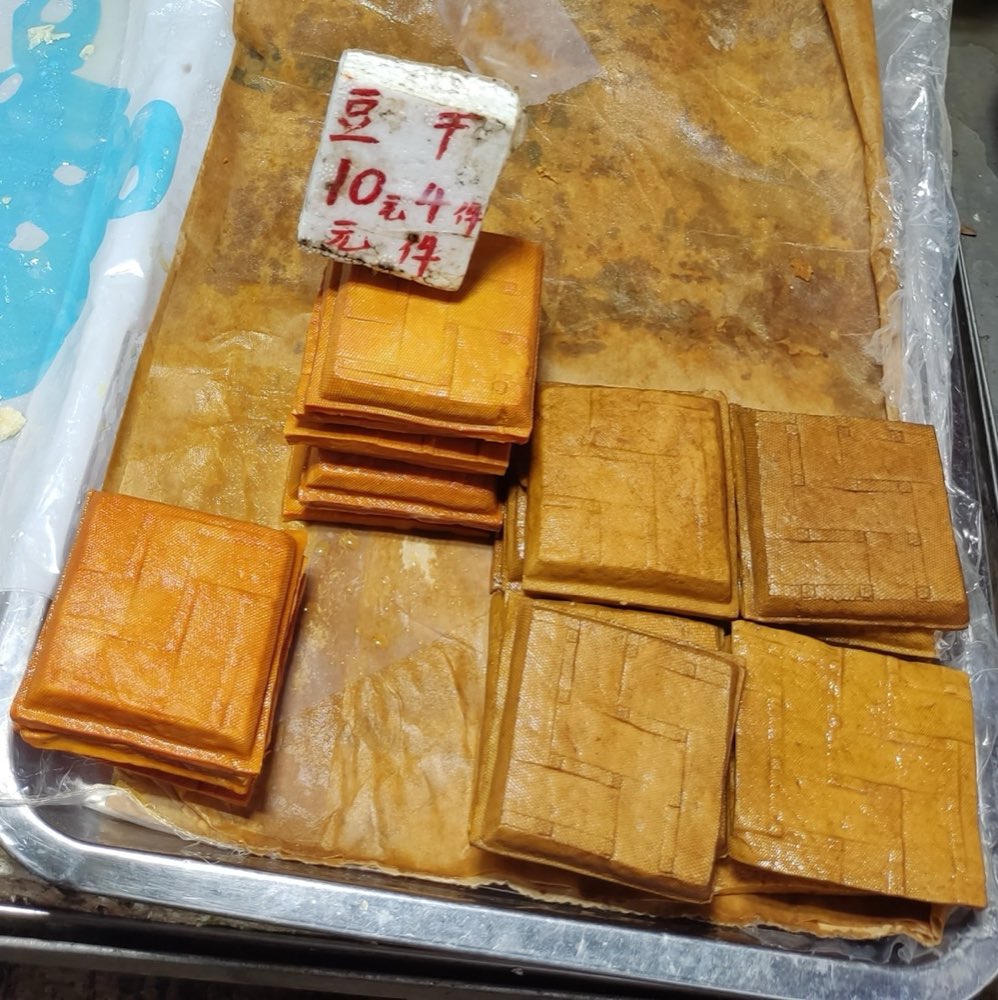
One word, six recipes
The core ideaProducts sold as 豆乾 span at least six different production routes. Some are pressed bean curd, some are rolled bean-curd skin, some are deep-fried, some are fermented. And one of the most common, 百頁豆腐, isn't really tofu at all. The texture differences you notice aren't random. They track three things:
Water
How hard the block was pressed. Less water → firmer, chewier, more protein- and calcium-dense. This is the whole tofu-to-dougan move.
The braise
Caramel 糖烏 vs. soy braise vs. food dye vs. smoke. Sets the surface color, the saltiness, and how much the piece shrinks.
The base
Pressed curd? Skimmed skin (yuba)? Reconstituted soy-protein slurry? Fried or fermented derivative? Two pieces that look alike can come from totally different materials.
From soybean to dougan
The shared chainEvery product here branches off one early pipeline, then diverges. The single most important fact: dougan is just tofu that has been pressed harder and dried further.
The coagulant stirred into the soy milk quietly decides texture and nutrition. 石膏 (gypsum) is cheap, sets a fine dense curd, and loads the piece with calcium, which is why dougan is calcium-rich at all: most of it comes from the gypsum, not the bean. 鹽滷 (nigari) sets a coarser curd. GDL adds no calcium and makes very soft tofu.
The firmness ladder
Water content ↓Everything firmer than soft tofu sits on one ladder, and pressing is what moves a piece down it. Wettest at the top:
Bars below firm tofu are relative, not measured. Taiwanese sources only ever say "lower than tofu," never a standardized moisture %. Treat any exact figure for dougan with suspicion.
The jump in protein and calcium density is purely the result of removing water. Nothing is added. It's concentrated.
All 13, side by side
Master comparison"Base material" is the column that explains the most. It's the real reason two things that look similar can feel totally different. Scroll →
| Variety | Base material | Texture | Color | Taste |
|---|---|---|---|---|
| 白豆乾White dougan | Pressed bean curd | Firm, solid, still moist; perishable | Dull off-white | Pure soybean, unseasoned |
| 黑豆乾Black dougan | Pressed bean curd | Dense, chewy, springy; tough skin | Coffee → near-black surface | Faintly sweet caramel |
| 五香豆乾Five-spice | Pressed bean curd | Medium-firm (軟硬適中) | Light coffee-brown | Mild herbal-savory |
| 滷豆乾 / 大溪Braised / Daxi | Pressed bean curd | Springy, firm; small air-holes | Soy-brown skin, cream interior | Savory, mellow, lightly smoky |
| 茶乾 / 黃金Snack / golden | Heavily pressed curd | Firmest, densest, snappy | Golden-yellow to brown | Concentrated savory |
| 煙燻豆乾Smoked | Pressed curd, smoked | Firm, dense, defined bite | Mahogany, glossy skin | Smoky, faintly sweet |
| 豆乾絲 / 干絲Shredded | Pressed curd, cut to strands | Firm chewy strands; mushy if over-blanched | White to pale yellow | Mild soy; carries dressings |
| 百頁豆腐Baiye tofu | Reconstituted soy protein | Smooth, bouncy like fish cake | White, square | Bland; a sponge for sauce; high fat |
| 千張 / 百頁Thin sheet | Pressed/stacked curd sheet | Thin, pliable; soaks up soup | Pale yellow / cream | Nearly flavorless alone |
| 油豆腐Fried tofu | Fried bean curd | Crisp skin, spongy or hollow interior | Golden/amber out, pale in | Rich, fried, slightly oily |
| 豆包 / 豆皮Yuba | Skimmed soy-milk skin | Fresh: soft melt. Fried: crisp, porous | Pale yellow / golden fried | Strong clean soybean aroma |
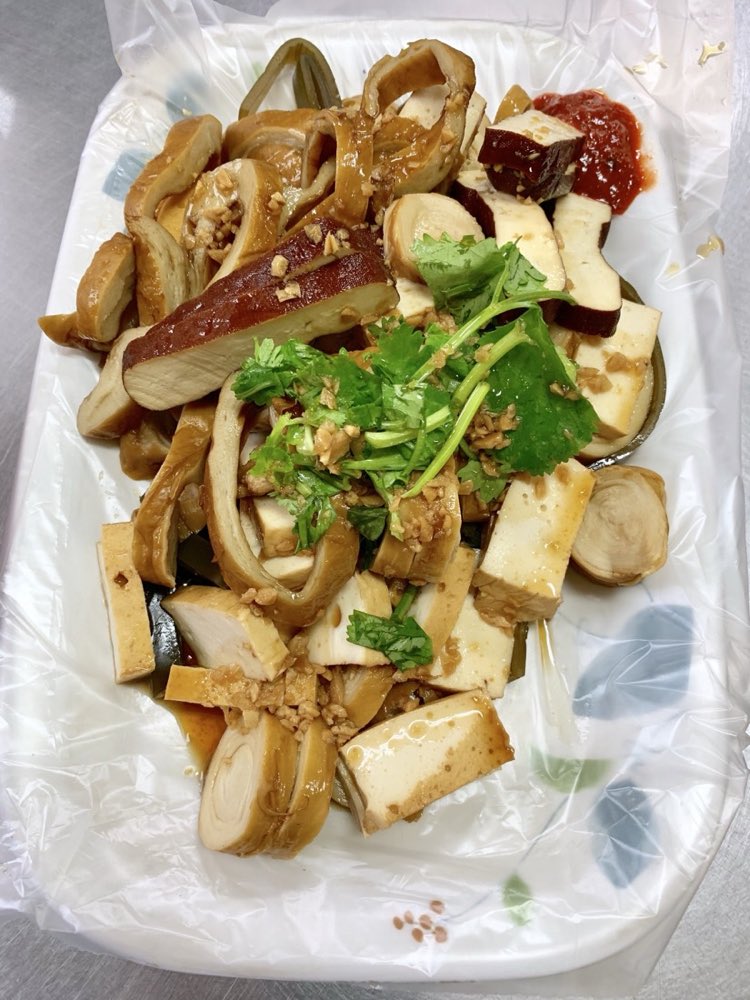
| 素雞Veg "chicken" | Rolled bean-curd skin | Chewy, firm; layered cross-section | Browned skin, pale layered inside | Savory braised |
| 臭豆乾 / 臭豆腐Stinky | Fermented pressed curd | Crisp shell, airy porous interior | Grey to ink-dark; gold when fried | Pungent fermented, savory |
The deep cuts
ProfilesThe pressed-curd core: the "true" dougan
All start from the same pressed bean curd. What separates them is almost entirely the finishing step: how long they braise, what colors them, how much they dry afterward.
白豆乾
- Make
- Board tofu cut and pressed a second time. Nothing added: no braise, no color, no smoke. This is the unfinished base of every type below.
- Feel
- Firm and solid, harder than board tofu but still full of moisture. Spoils fast. Left out a few hours it weeps water. That perishability is the original reason braising and coloring were invented.
- Taste
- Its whole selling point: clean, undiluted soybean aroma, nothing to mask it.
- Color
- 暗白色, dull off-white. The genuine, natural color of all dougan before anything is done to it.
黑豆乾
- Make
- Simmered in 糖烏: cane sugar slow-cooked until it carbonizes into a thick, faintly bitter caramel. Color depth is set by time in the pot: ~5 min for light, ~15 min for full black. Over-braise and it turns bitter, so timing is the maker's main skill.
- Feel
- Longer braise → more shrinkage and water loss → denser, chewier (較Q彈) than white, with a tough outer skin. Keeps longer, too.
- Tell
- With real 糖烏 the color sits on the surface only. A cut cross-section is still white. It bleeds slightly when wet-rubbed and tints standing liquid faint coffee.
五香豆乾
- Make
- Braised in soy sauce, rock sugar, and a five-spice set: star anise (八角), licorice (甘草), cassia (桂皮), five-spice powder. Often the sugar is caramelized first, so color and flavor happen together.
- Feel
- Neither hard nor soft (軟硬適中): the most broadly popular eating texture. Craft detail: braising with no standing water keeps internal air-holes from forming, for a denser "軟Q" body.
- Taste
- Mild, savory, a faint Chinese-medicine herbal note. The default flavor of the whole category.
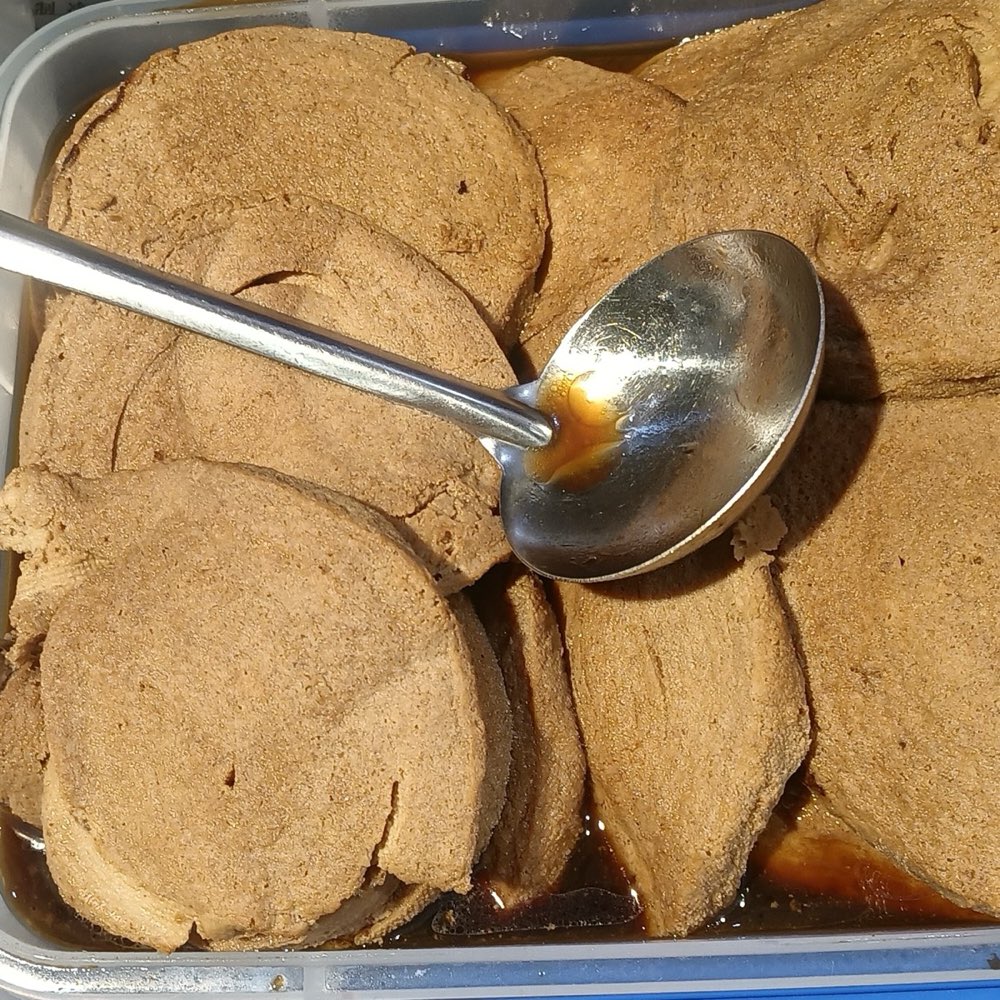
滷豆乾 / 大溪豆乾
- Make
- No single recipe. One Daxi maker braises three times in salted black caramel, then three times in five-spice brine. Another stir-fries it in a ~100°C wok for ~80 min, then machine-dries it. Both saturate color and flavor through every layer.
- Feel
- Springy yet firm and substantial (彈牙紮實), soy-brown skin over a cream (米黃) interior carrying small air-holes. Firmer and heavier-flavored than white.
- Note
- The lore that Daxi's soft water makes it better is repeated everywhere, but the sources themselves frame it as legend (相傳), with no measured backing.
茶乾 / 黃金豆乾
- Make
- Engineered mainly through press strength: the harder and longer the press, the flatter, drier, firmer, more sliceable it gets. Golden color added with caramel plus food yellow No. 4 (Tartrazine) or No. 5 (Sunset Yellow).
- Feel
- The firmest, densest, snappiest of the pressed types. Slices thin for stir-fries or eats as a chewy snack.
- Taste
- Concentrated and savory; the uncolored firm grade has the purest soybean aroma of any dougan, because nothing masks it.
- Tell
- A bright, vivid yellow signals added dye. Caramel can never produce a vivid yellow, only brown.
煙燻豆乾
- Make
- Seasoned dougan is steam-set, then smoked over wood, or over sugar (糖燻, where rock sugar adds both browning and aroma). The surface keeps darkening after it leaves the smoker, so it's pulled early; over-smoking turns it burnt and bitter.
- Feel
- Firmer and more defined than fresh tofu; the smoked skin adds its own layer of chew.
- Taste
- Smoky, salty enough in the skin to need little seasoning. Some compare the note to smoked cheese.
豆乾絲 / 干絲
- Make
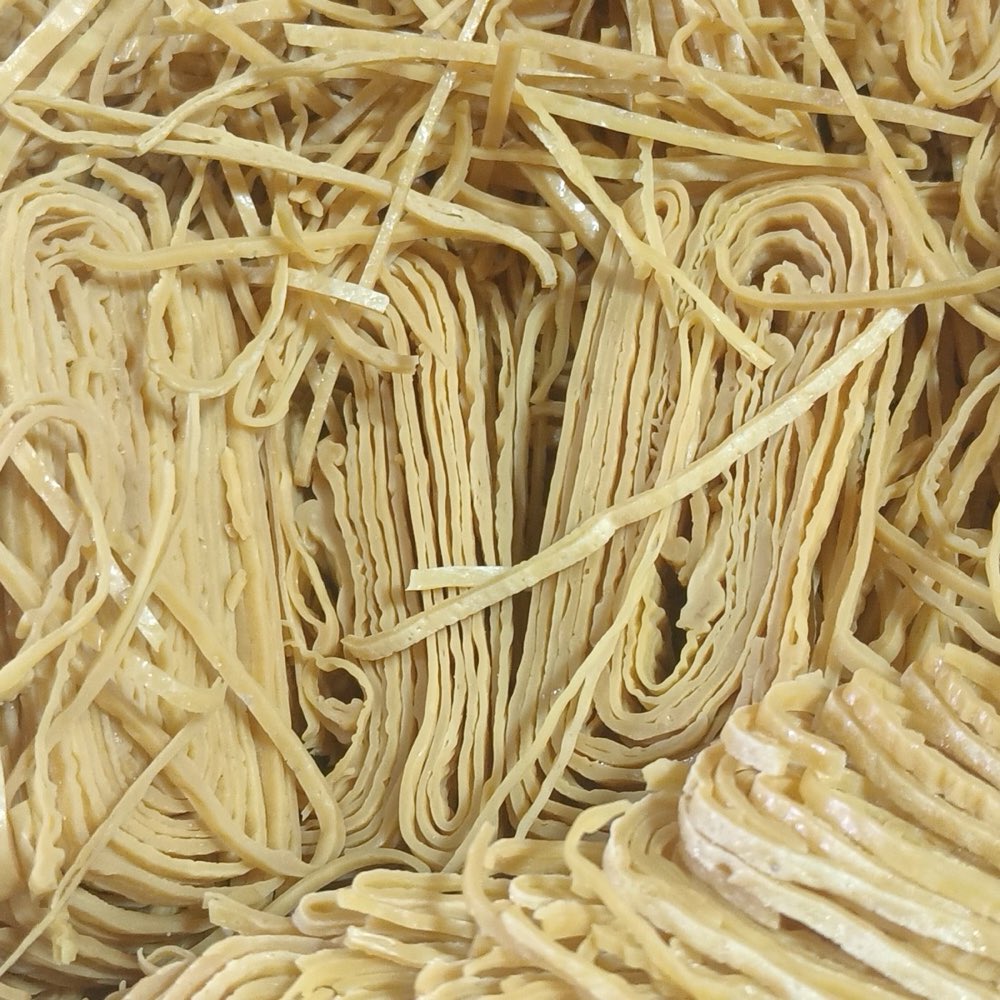
- Exact same material as a block, just cut. A firm block is sliced into thin sheets, then into fine strands. So 干絲, 豆乾絲, and 豆腐絲 are the same thing: shredded pressed tofu, a soy-protein food. Not a noodle, despite the look.
- Feel
- Firm, springy strands when cooked right. Over-blanching makes them soft and mushy and kills the texture.
- Note
- Commercial strands are often treated with alkali (鹼) for texture, leaving a taste removed at home by blanching or a baking-soda soak (去鹼).
香干
- Make
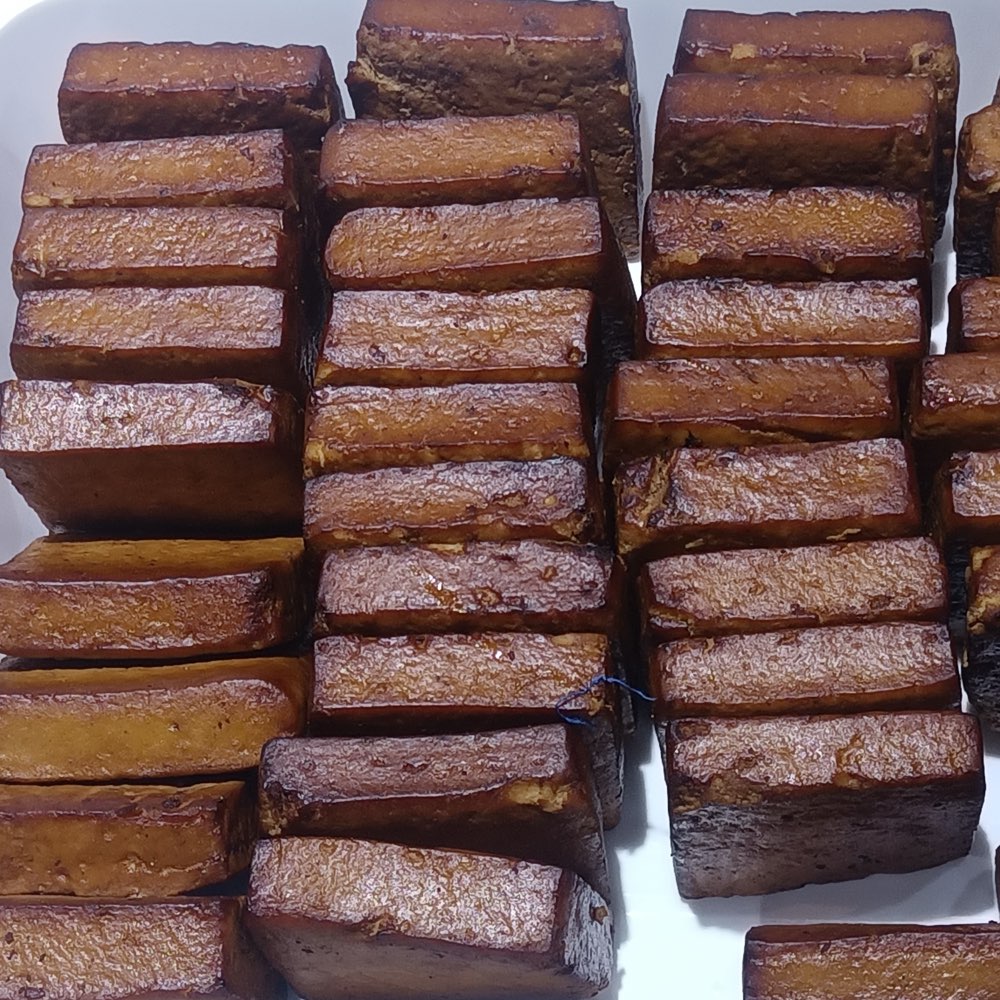
- Pressed bean curd steeped or braised in a spiced soy brine: five-spice powder, star anise, fennel, plus caramel/soy color (醬色). It's the mainland name for the same spiced-and-pressed product Taiwan calls 五香豆乾 / 滷豆乾.
- Feel
- Firm and tight (質地緊實). Sliced thin, it holds its shape in a hot wok.
- Color
- Brown-red (棕紅) on the surface over a paler interior: the braise on the skin, the curd still light inside, exactly as with Taiwan's braised types.
- Eat
- Eaten ready-made or stir-fried, the classic being celery (芹菜炒香干). Tied especially to the Jiangnan region, though not only there; Hunan's 攸縣香干 is its own famed style.
Skin & rolled forms: not pressed curd
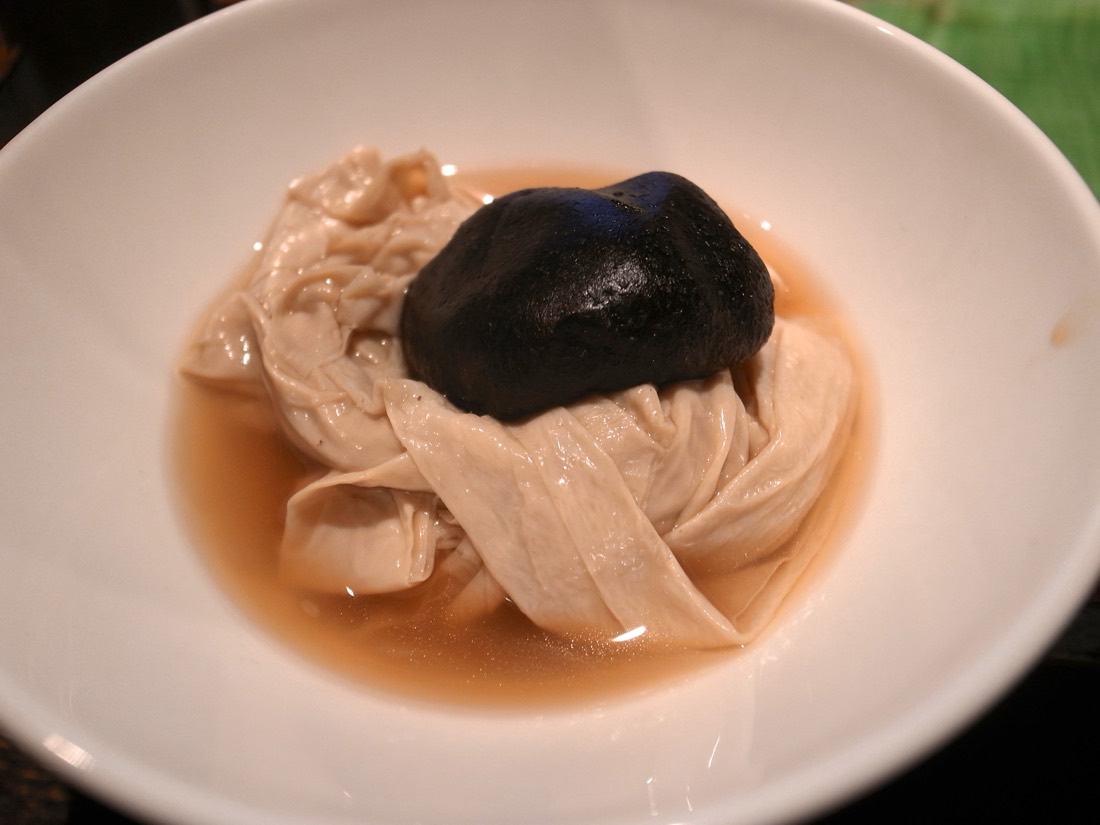
These come from yuba (the skin skimmed off heated soy milk), not from pressed curd. That's why their cross-section is layered rather than solid, and why they feel different even when braised the same way.
豆包 / 豆皮
- Make
- Hold soy milk at a simmer and proteins at the surface bond into a thin film. Lift it off. That's yuba. Folded layer over layer it becomes fresh 生豆包; fried low it becomes crisp 炸豆包.
- Feel
- Fresh: thin, soft, high-moisture, almost melt-in-mouth. Fried: puffed, crisp, porous. It drinks up soup and keeps at room temperature.
- Taste
- A rich, clean, concentrated soybean aroma, stronger than most pressed dougan, because so little is done to it.
- Kin
- 腐竹 is the same film dried far longer into hard, elastic rods.
素雞
- Make
- Sheets of yuba or 千張 are stacked, rolled tight into a cylinder, bound in cloth, tied hard, and steamed to set. On cooling, the layers bind into one body. Roll it loose and it falls apart.
- Feel
- Chewy, firm, springy, with a visibly layered cross-section, its defining structural signature, completely unlike the solid homogeneous body of block dougan.
- Taste
- Savory and braised: soy, sugar, sesame oil, five-spice. Often red-braised (紅燒) or pan-fried after steaming.
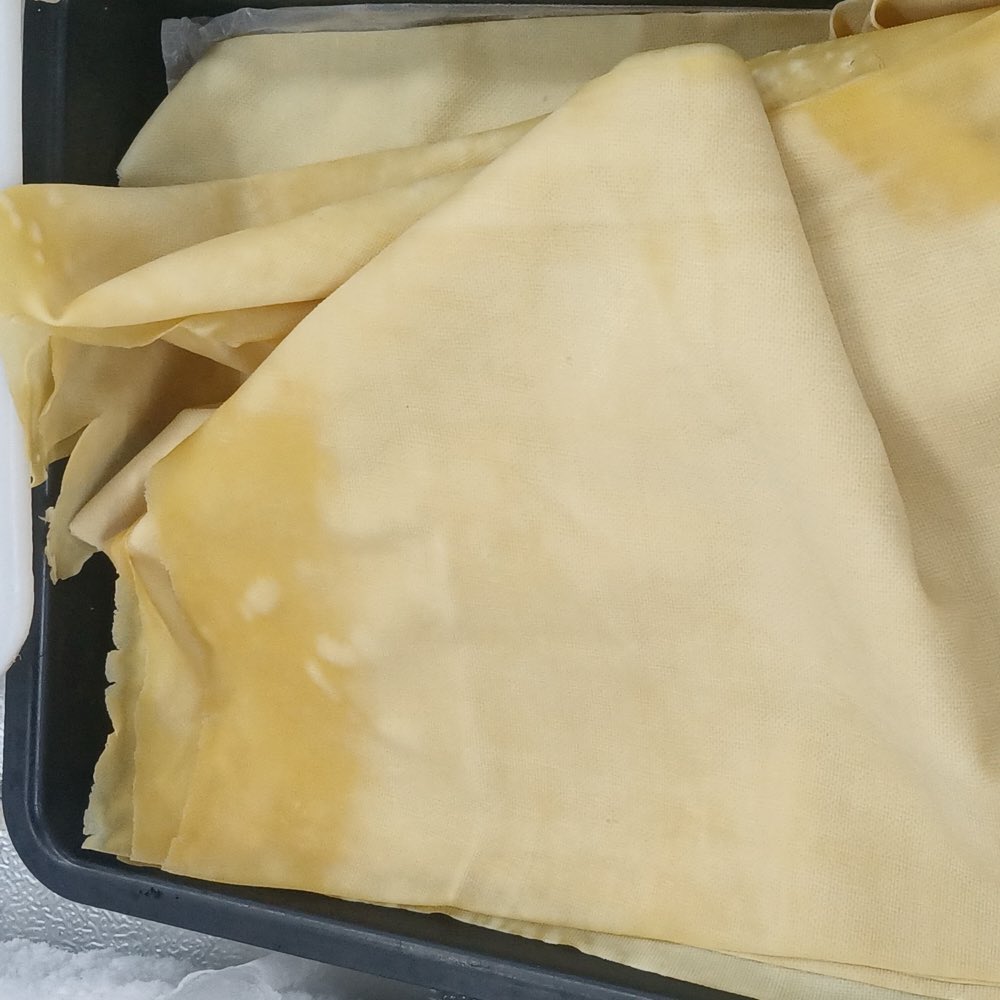
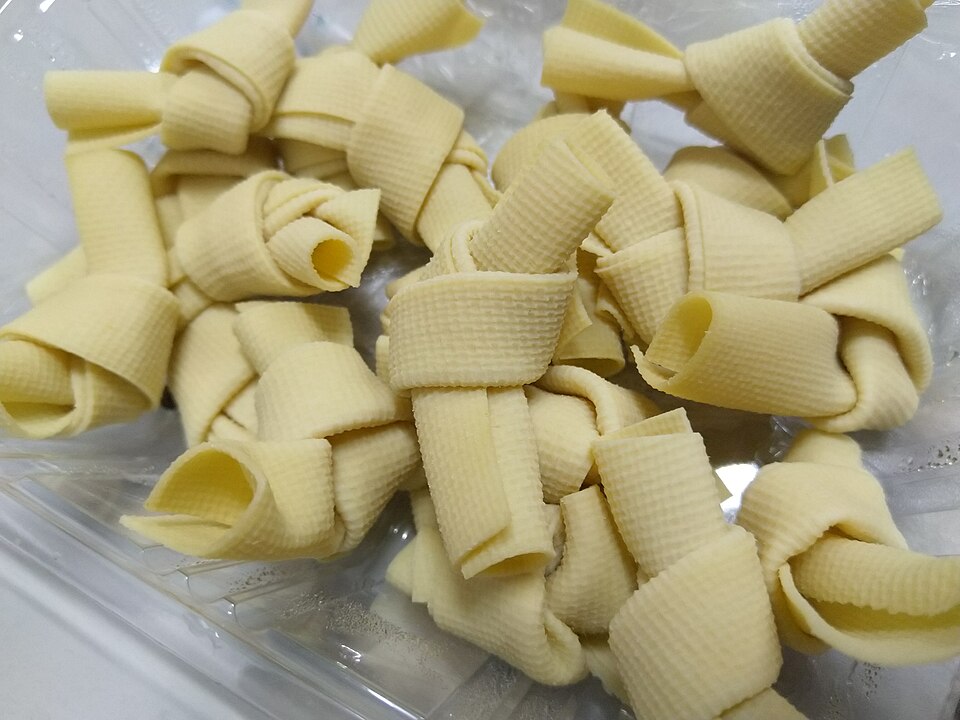
千張 / 百頁
- Make
- A thin, low-moisture bean-curd sheet. Sources disagree on the method: curd wrapped in many cloth layers and pressed very thin, vs. thin layers of soy milk heated into films and stacked. Both yield a thin layered sheet.
- Feel
- Thin and pliable, little chew: a vehicle that holds shape and soaks up soup.
- Use
- Shredded, tied into knots (千張結), used as wrappers, or rolled up into 素雞.
The processed imposter
One of the most common things in the tofu aisle isn't tofu.
百頁豆腐
- Make
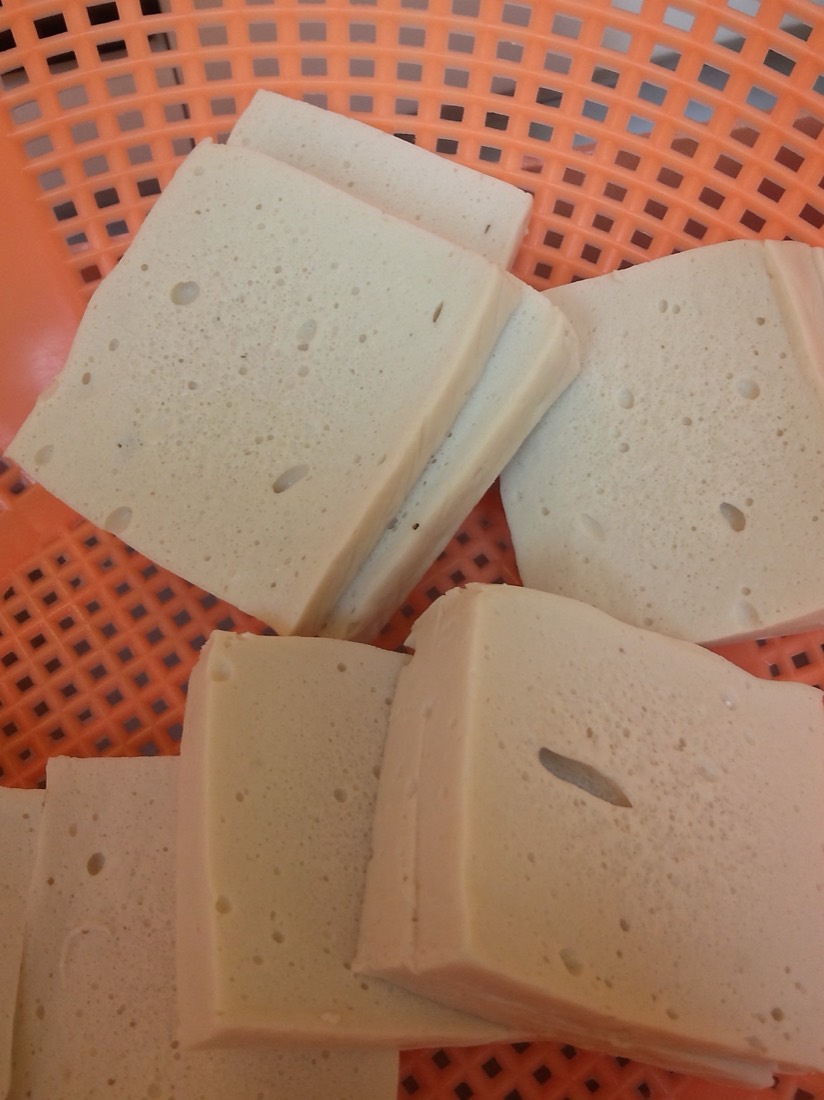
- Built from soy protein, starch, oil, water, and seasoning, then emulsified into a slurry, poured into molds, and steamed, like baking a cake. It's made from "reconstituted soy milk" (還原豆漿 = soy protein + water), not the raw soy milk that defines real tofu.
- Feel
- Smooth, dense, uniform, distinctly bouncy and springy (Q彈), the closest thing in the aisle to kamaboko. Pores let it absorb large amounts of sauce.
- Numbers
- ≈196 kcal, 13 g protein, 13 g fat per 100g: fat ≈ protein. Calcium is low (~33 mg) because it isn't set with calcium sulfate.
- Tell
- The "70% oil" claim is an exaggeration: fat is ~10–20% by weight. And it freezes and thaws with almost no texture change, rare among soy products.
Fried & fermented derivatives
Two more processes that restructure the protein entirely: frying flashes water to steam; fermenting loosens the body. Both start, though, from pressed firm tofu.
油豆腐
- Make
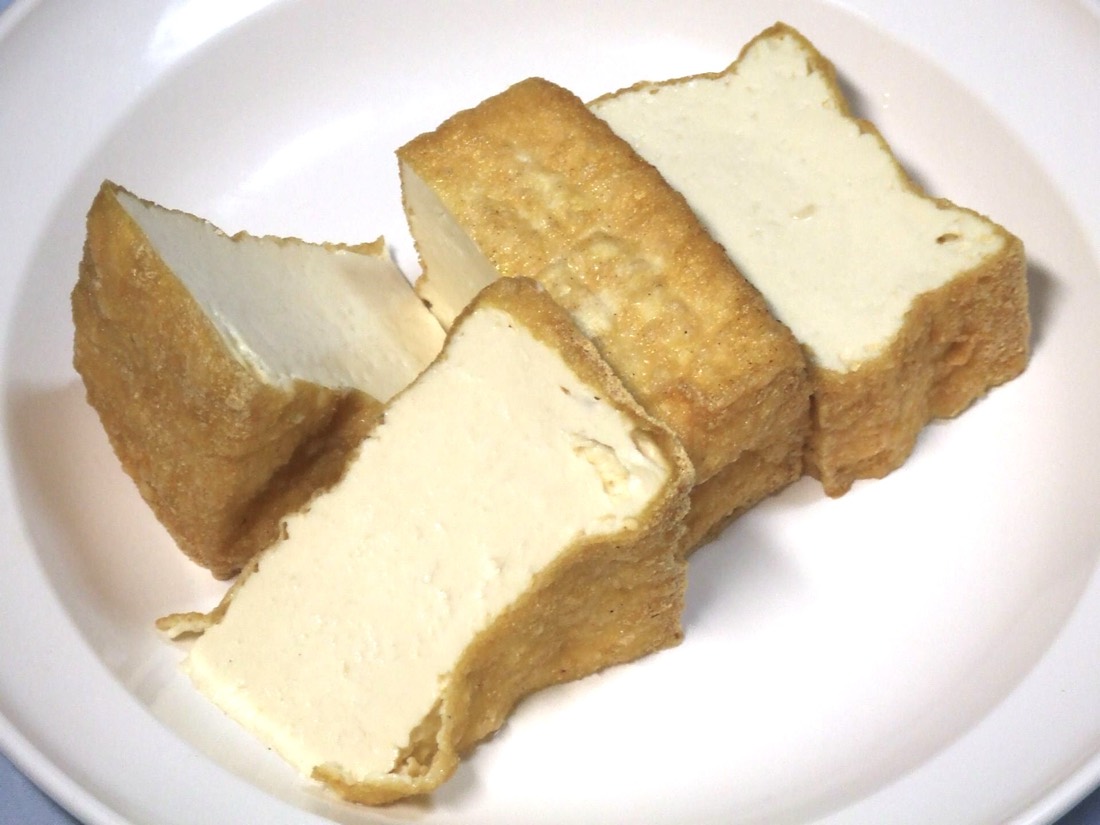
- Firm tofu deep-fried in two stages: a low-temp fry to puff and expand, then a high-temp fry to set shape and color. Traditional shops keep two oil vats for it.
- Feel
- Crisp golden skin over a soft interior. Internal water flashes to steam and pushes the block into a honeycombed (蜂窩) sponge: small pieces go hollow, big blocks stay denser inside.
- Taste
- A rich, almost fried-chicken aroma. The skin's oil tastes greasy and blocks seasoning, so cooks blanch it (去油) first, which also re-opens the pores.
臭豆乾 / 臭豆腐
- Make
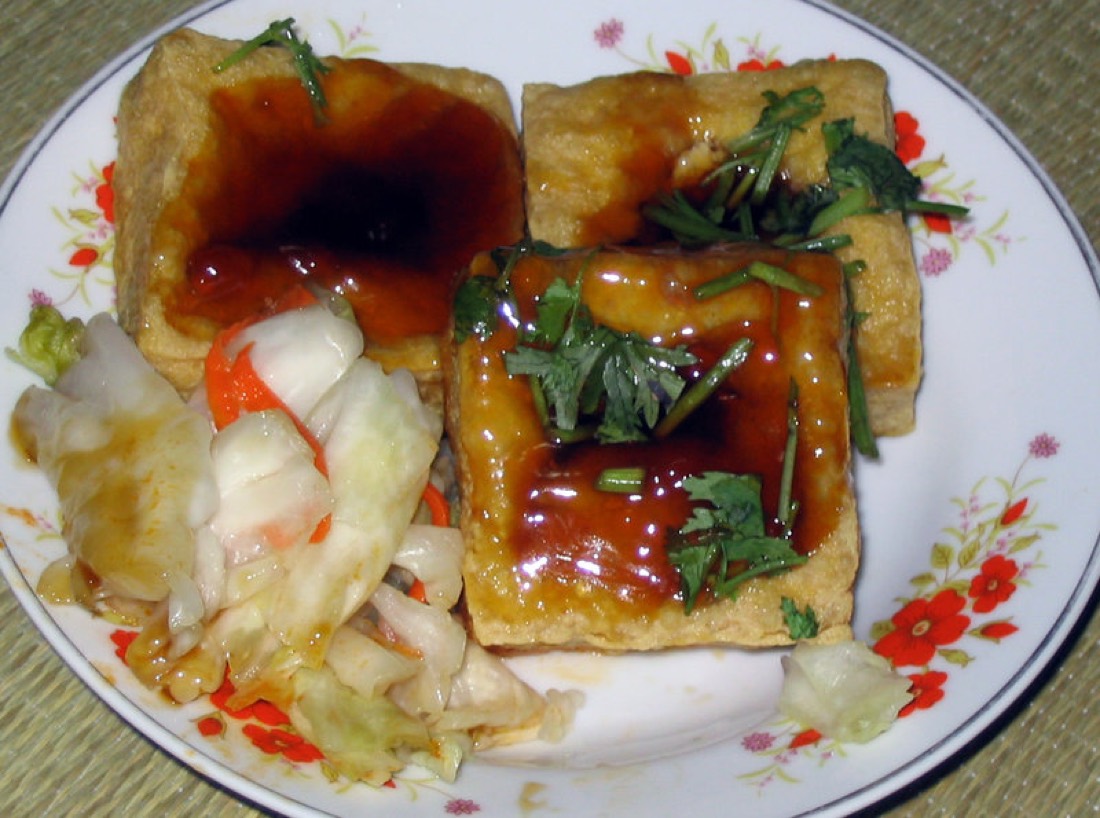
- Pressed white tofu soaked in a fermenting brine (臭滷水): classically older amaranth (莧菜) steeped in rice-washing water. Microbes break down the protein, loosening structure and creating the smell.
- Feel
- Fries into a crisp shell over an airy interior riddled with holes: 外脆裡鬆. Started as a pressed block, so it needs longer frying and eats chewier than the soft type.
- Caveat
- Most mass-market fried stinky tofu now just soaks 6–8 hours in pre-made brine and doesn't truly ferment, which is why some of it tastes like ordinary fried tofu.
Reading the color
Cross-cuttingColor is the most misread property of dougan. The natural color of all pressed bean curd is dull off-white. Every brown, black, or yellow piece got that way by one of these:
How to read a piece by eye:
Brown surface, white core → natural caramel. The color is only skin-deep.
Colored all the way through → dye penetration, not caramel.
Vivid bright yellow → added dye. Caramel can't make this color.
Standing liquid turns coffee → caramel bleeding off the surface.
Why each one feels the way it does
Texture spectrumFour physical processes move a soy product's texture. Most varieties are just combinations of them. Once you know which a piece has been through, its texture is predictable.
Pressing
Removes water, tightens the protein network. More pressing → firmer, drier, more sliceable, more protein- and calcium-dense. The whole tofu-to-dougan move.
Braising & drying
Shrink the piece through water loss and protein contraction. Longer cycles → denser, chewier, darker, longer-keeping. Why black dougan beats white for chew, and how 鐵蛋 iron eggs get small and rubbery.
Frying
Flashes internal water to steam, puffing the piece into a spongy or hollow interior under a crisp skin. Makes 油豆腐 and fried stinky tofu.
Fermenting & freezing
Loosen or restructure the protein into a porous, absorbent body: stinky tofu's holes, 凍豆腐's honeycomb.
Naming traps & honest gaps
Where sources fightWhere this comes from
Sources & creditsCompiled from Taiwanese government, food-science, and journalism sources, focused on physical properties; cultural and regional history deliberately left out. Claims cross-checked where possible; conflicts flagged above.
Prefer it unabridged? This page distills a longer write-up. read the raw field guide →
Full source list (30+ references)
- 農業部 食農教育平臺 · fae.moa.gov.tw
- 自由時報 食譜自由配 (tofu family / 油豆腐 / 百頁豆腐) · /4663, /6922, /10977, /7284
- 好食課 learneating · tofu calories & calcium, soy processing
- 康健雜誌 · commonhealth.com.tw
- 上下游 News&Market (coagulants) · /85991
- 上下游 News&Market (糖烏 process, surface vs. cross-section) · /31443
- PanSci 泛科學 (commissioned by 環境部) · /126916
- 環境部化學物質管理署 · moenv.gov.tw
- 玩咖 Playing / 自由時報 (Daxi 糖烏) · playing.ltn, food.ltn /7136
- 大溪豆干 · 維基百科
- 台灣麒麟 (大房豆干 process) · kirin.com.tw
- 徐仲 飲食文化 (natural pigments) · hsuzong
- ETtoday / 食藥署 · health.ettoday
- 得倫食品 (沙茶豆干 panel) · dl-food.com
- 香干 (regional cousin) · Chill Crisp · Tofu Products · The Woks of Life (五香豆干)
- TechOrange / 謝玠揚 台大化工博士 · "bean curd, not tofu"
- CitiOrange (maker side) · hundred-layered beancurd
- 百頁豆腐 · 維基百科
- 今周刊 · businesstoday.com.tw
- 呂孟凡營養師 · dietitianbread.com
- 千張 · 維基百科 · 大煮干絲 · 維基百科
- 自由時報 (干絲 去鹼) · /11934
- 小半天豆干味 · king-pin · 春豐豆類食品 · soypro.com.tw
- 食力 foodNEXT (fried-tofu mechanism) · foodnext.net
- 豆卜 · 維基百科
- Cookpad Taiwan (豆皮 / 豆包 / 腐竹 / 千張) · cookpad.com/tw
- 夢幻廚房在我家 (素雞) · dreamchefhome.com
- 臭豆腐 · 維基百科
- 食力 foodNEXT (鐵蛋) · foodnext.net · 今周刊 (鐵蛋) · businesstoday
Photographs are reused under their licenses, self-hosted (nothing hotlinked): 豆乾 market by EHALAM BorG 600M (CC BY-SA 4.0); Daxi 現滷豆干 by bryan… (CC BY-SA 2.0); shredded by Fumikas Sagisavas (CC0); yuba by pelican (CC BY-SA 2.0); 素雞 by Fumikas Sagisavas (CC0); 百頁豆腐 by FlipTable (CC BY-SA 3.0); 油豆腐 by Potesara (CC BY-SA 2.5); 臭豆腐 by Richy (CC BY-SA 3.0); 千張 sheet by Fumikas Sagisavas (CC0); 千張結 (knotted) by 汮汐 (CC BY-SA 4.0); 香干 (xiānggān) by Fumikas Sagisavas (CC0). All via Wikimedia Commons. Guide compiled June 2026, physical-property focus.